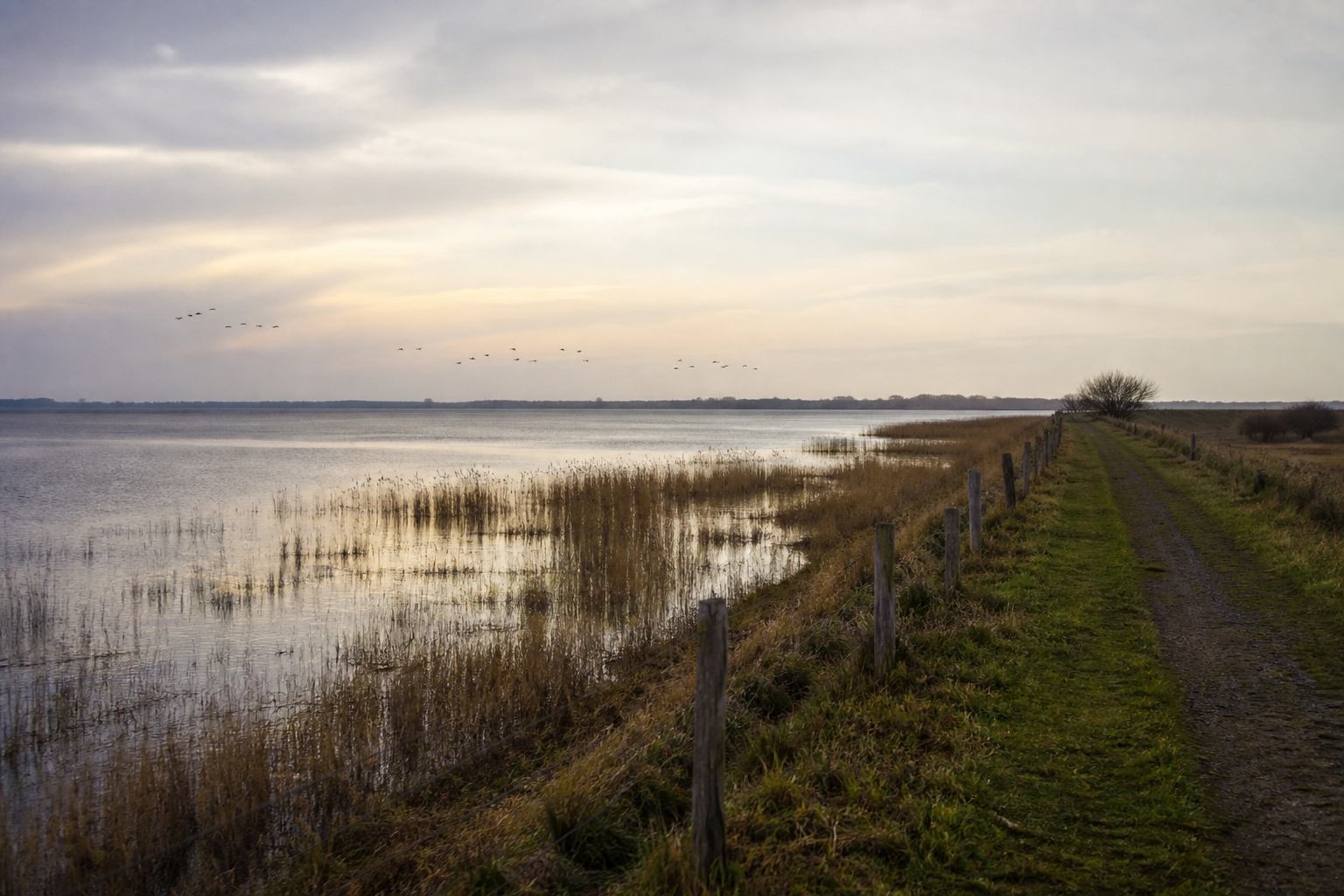
Reed shores · Bird basin
Dümmer See, where the dike becomes the path
South-west of Steinhuder Meer the country turns quieter and more agricultural. Dümmer See is a large shallow lake held by embankments, fringed with reed and famous among birders who accept that the best views are often half a kilometre away.
Water held by earth
Flood history is written into the dikes. The lake’s water level is managed; the surrounding wet grassland and reed beds are part of a protected complex that matters for migratory birds on the north German plain. What the walker experiences is a long horizontal line: embankment, reed, water, cloud. There is little theatre of cliffs or towers. The pleasure is repetition and change of light.
Lembruch and neighbouring lakeside villages are the practical gates. Regional trains and buses put you within a short ride of the dike. From there the day is mostly walking or cycling on the crown of the embankment, with occasional drops to observation points. vantapal’s Reed Shore Route treats this basin as a half-day or full-day loop depending on wind.
Birds at a respectful distance
Greylag geese, herons, ducks and, in passage, cranes use the wetland as stage and pantry. The ethical stance is distance: binoculars, not drones; hides where they exist; no cutting through reed for a closer frame. Bronze September — when reed turns gold and mornings cool — is often richer than midsummer for watching. Cloud December empties the shore into a silver diagram of water and sky that photographers love and that wildlife uses as quiet recovery.
Compared with Steinhuder Meer, Dümmer feels less like a leisure lake and more like a working wetland with a path on top. Both belong to the same Silver Marsh Germany idea — Zwischen Wiesen & Wasser — but Dümmer teaches patience. Pair it with the Weser meadows if you want green after pewter, or finish a longer itinerary on day five as described in the five-day sky route.
Reed is the architecture here. The dike is only the balcony.
Field questions
Is Dümmer better for birds than Steinhuder Meer?
Often yes for concentrated wetland watching, especially in passage months. Steinhuder Meer is stronger for open-water riding and mixed leisure shore days. See also the glossary entries on reed and marsh.
What should I pack?
Windproof layer, rain shell, binoculars, water, offline map. The dike is exposed. Footwear can be trainers in dry weather; after rain the lower tracks mud quickly.
How long do I need?
Three to four hours for a focused dike walk; a full day if you combine cycling, hides and a village lunch. Overnight near Lembruch keeps dawn available.